

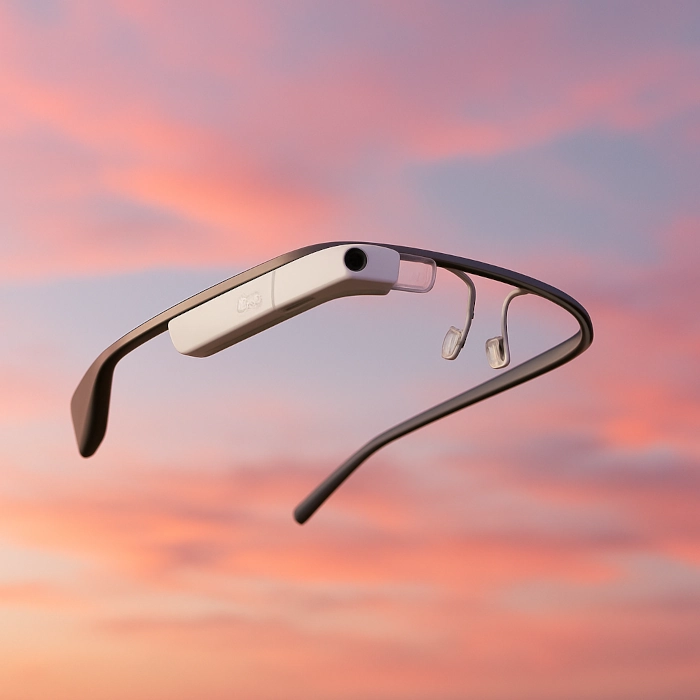
The way we assess skills and knowledge has remained largely unchanged for decades: written exams, practical tests in simulated environments, or observational evaluations. While these methods have their place, they often fall short in capturing the nuances of real-world performance, especially for hands-on or highly interactive roles. This is where wearable augmented reality devices, such as Google Glasses, are emerging as a fascinating frontier for assessment.
Imagine a future where:
Vocational Training: An apprentice plumber, wearing smart glasses, performs a repair. The glasses could overlay instructions, highlight potential errors, and even automatically record the successful completion of steps, providing instant feedback and objective assessment of their practical skills.
Medical Procedures: Medical students could be assessed on their surgical technique, with the glasses tracking their movements, precision, and adherence to protocols without the need for an instructor to constantly peer over their shoulder.
Customer Service Simulations: Employees could practice difficult customer interactions in a virtual overlay on their real environment. The glasses could track eye contact, vocal tone, and response times, providing data-driven insights into their soft skills performance.
On-the-Job Compliance and Safety: In hazardous environments, workers could be assessed on their adherence to safety protocols in real-time. The glasses could identify incorrect procedures or missed steps, alerting both the worker and the supervisor.
How could this work?
Wearable AR devices, with their integrated cameras, sensors, and display capabilities, can:
- Overlay Information: Provide step-by-step instructions or visual cues directly in the user’s field of vision during a task.
- Track Performance: Monitor eye movements, hand gestures, task completion times, and even biometric data to assess engagement and proficiency.
- Record and Replay: Capture first-person video of a task being performed for later review, analysis, and detailed feedback.
- Automated Scoring: Leverage AI and machine learning to analyze recorded data against predefined criteria, providing objective and consistent scoring.
- Contextual Feedback: Offer real-time corrective feedback or prompts directly within the workflow, helping learners self-correct.
The transition to assessment via devices like Google Glasses presents exciting possibilities for efficiency, objectivity, and realism. However, it also raises important questions regarding data privacy, security, and the ethical implications of continuous monitoring.
While challenges remain, the potential for augmented reality to revolutionize how we measure competence and facilitate on-the-job learning is undeniable. As wearable technology continues to advance, the days of static, isolated assessments may soon be a thing of the past, replaced by dynamic, integrated evaluations that truly reflect real-world capabilities. The future of assessment might just be looking back at us, through smart lenses.